

Table of Contents

Advantages and Disadvantages of (AI) Artificial Intelligence , as AI is changing the world in unprecedented ways, reshaping industries, boosting productivity, and revolutionizing the way we live and work. However, like any technological advancement, AI has both advantages and disadvantages. Understanding these aspects can help us harness its power responsibly while minimizing potential risks.
Advantages of AI
1. Increased efficiency and automation
The advantage of AI-powered automation is that it increases efficiency by handling repetitive and time-consuming tasks with precision. In industries such as manufacturing, AI-powered robots streamline production lines, minimizing human intervention and reducing operational costs. Healthcare professionals use AI to manage patient records, automate diagnosis, and schedule appointments, reducing administrative workloads. Customer service chatbots provide instant support, resolving queries without human assistance. AI also improves logistics and supply chain management, optimizing routes and inventory management. By automating mundane tasks, businesses can focus on innovation and strategic growth.
2. Enhanced Decision-Making
The advantage of AI systems is that they can analyze massive amounts of data in real time, providing insights that assist in making informed decisions. Businesses use AI for market analysis, risk assessment, and predictive modeling, improving strategic planning. Financial institutions leverage AI to detect fraudulent transactions and assess credit risk accurately. In healthcare, AI helps doctors diagnose diseases by analyzing medical images and patient history. Governments and law enforcement agencies use AI for crime prediction and urban planning. With AI-driven analytics, organizations can reduce human bias and make data-backed decisions that improve efficiency and effectiveness.
3. Personalization and Customer Experience
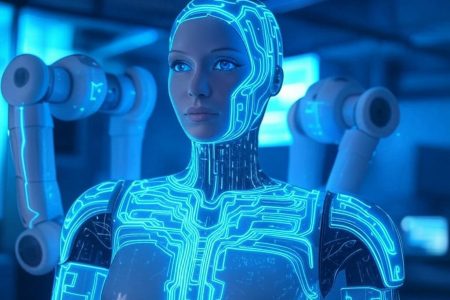
AI-powered algorithms improve user experience through personalized recommendations in e-commerce, entertainment, and online services. Platforms such as Netflix, Amazon, and Spotify use AI to suggest content tailored to individual preferences. AI chatbots and virtual assistants provide real-time responses, improving customer engagement and satisfaction. Retailers use AI to analyze customer behavior, provide targeted promotions, and improve sales. AI-powered language processing tools enable real-time translation, breaking down communication barriers. By analyzing user data, AI ensures that services are more relevant and tailored to individual needs, thereby increasing overall customer satisfaction
4. Innovation and Scientific Advancement
We can use the advantages of AI to contribute to advancement in medicine, space exploration, and environmental protection. AI-powered research speeds up drug discovery, identifying potential treatments faster than traditional methods. In space exploration, AI helps analyze astronomical data, optimize satellite functions, and guide autonomous space missions. Environmental scientists use AI to monitor climate changes, predict natural disasters, and develop sustainable energy solutions. AI is also used to monitor climate change, predict natural disasters, and develop sustainable energy solutions. Transforming education through intelligent tutoring systems that personalize learning experiences. By advancing research and development, AI fosters groundbreaking innovations that benefit humanity on a global scale.
5. Reduction of human errors
AI eliminates common human mistakes caused by fatigue or oversight. In sectors such as finance, AI-powered systems detect anomalies in transactions, thereby preventing financial fraud. In aviation, AI assists pilots by automating flight controls and monitoring critical parameters, thereby ensuring safe air travel. Healthcare professionals use AI-powered diagnostic tools to detect diseases in the early stages, thereby reducing misdiagnoses. In manufacturing, AI-powered robots ensure accuracy in assembly lines, thereby reducing defects in products. With AI’s ability to accurately process and analyze large amounts of data, industries can reduce errors and improve overall reliability.
6. 24/7 availability
Unlike humans, AI-powered chatbots and virtual assistants provide round-the-clock customer support, improving service efficiency without downtime. Businesses can operate 24/7 with AI-powered solutions, increasing customer engagement and satisfaction. AI helps with IT support by detecting system failures and providing automated troubleshooting solutions. In healthcare, AI continuously monitors patient critical information, ensuring timely medical intervention. AI-powered smart assistants like Siri, Alexa, and Google Assistant provide real-time assistance for daily tasks. With seamless functionality, AI ensures consistent and reliable services across various industries.
Disadvantages of AI
1. High implementation cost
The disadvantage of AI is that Developing and integrating AI solutions requires significant investment in technology, infrastructure, and skilled professionals, making it expensive for small businesses. AI models require extensive data training and computing power, which increases operational expenses. Regular maintenance and software updates add to the overall cost. Businesses must invest in cybersecurity measures to protect AI systems from cyber threats. Additionally, hiring AI experts and data scientists can be expensive due to the high demand. Despite its benefits, the high initial cost of AI adoption becomes a challenge for many organizations.
2. Job displacement
AI-driven automation threatens traditional jobs, especially in industries that rely on repetitive tasks. The disadvantages of AI is that the Employees working in manufacturing, retail, and customer support risk layoffs as AI-powered machines and chatbots replace human roles. While AI creates new job opportunities in AI development and data science, this shift requires significant upskilling and reskilling efforts. If the adoption of AI is not balanced with workforce development programs, economic inequalities may increase. Governments and businesses should address this challenge by investing in education and training programs to prepare employees for AI-powered industries.
3. Lack of human emotion and creativity
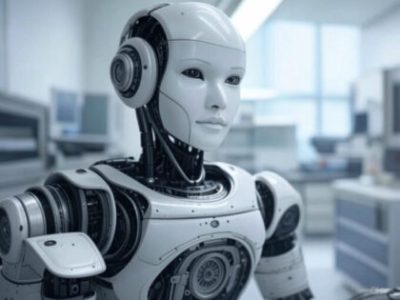
AI is good at data processing but lacks emotional intelligence and creative thinking. Disadvantages of AI is that the Jobs that require empathy, ethical judgment, and human intuition—such as consulting, creative arts, and diplomacy—are unlikely to be replaced by AI. While AI can generate art, music, and literature, it lacks the depth of human experiences and emotions that inspire true creativity. AI chatbots may struggle to understand subtle customer emotions, leading to impersonal conversations. Decision-making in areas such as law and ethics requires human values and moral reasoning, which AI cannot currently replicate. Therefore, AI remains a tool that complements rather than replaces human intelligence.
4. Ethical and privacy concerns
The disadvantage of AI-driven data collection is that it raises ethical concerns about surveillance, privacy violations, and biases in decision-making. Companies collect large amounts of user data to train AI models, raising concerns about misuse and unauthorized access to data. AI-based facial recognition systems have been criticized for violating individual privacy and enabling mass surveillance. Bias in AI algorithms can lead to unfair outcomes in hiring, lending, and law enforcement. Ethical guidelines and regulations are necessary to ensure transparency and fairness in AI applications. Addressing these concerns is important to build public trust in AI technologies.
5. Dependence on AI and technical failures
Excessive reliance on AI systems can be risky, especially if the technology fails or becomes compromised. The disadvantage of AI is that Malfunctions in AI-powered healthcare, financial trading, or autonomous vehicles can have catastrophic consequences. AI-powered cybersecurity systems may fail to detect sophisticated cyber threats, leaving sensitive data vulnerable. Organizations that rely solely on AI may struggle in situations requiring human judgment and adaptability. Ensuring backup systems and human oversight are in place to mitigate potential failures is essential. Striking a balance between AI automation and human intervention is the key to maintaining system reliability and security.
Conclusion
Advantages and Disadvantages of AI are like a double-edged sword, offering immense benefits while presenting significant challenges. To maximize its potential, businesses and governments should implement ethical AI frameworks, promote upskilling programs, and address privacy and security concerns. By balancing innovation with responsibility, we can ensure that AI positively serves humanity without increasing risks.
Certainly. I agree with told all above.
Thankyou sir,
this a great encouragement for me to write more blog posts.
I’m eager to satisfy your deepest desires – https://rb.gy/1vo60q?80675219
My hands are wandering and I need a real man to watch. – https://telegra.ph/Enter-01-31?Smoorce
You consistently create content that stands out.
This post delivered SO MUCH VALUE — incredible!
You’ve taken this topic to a whole new level — amazing!
Your enthusiasm makes this post unforgettable!